
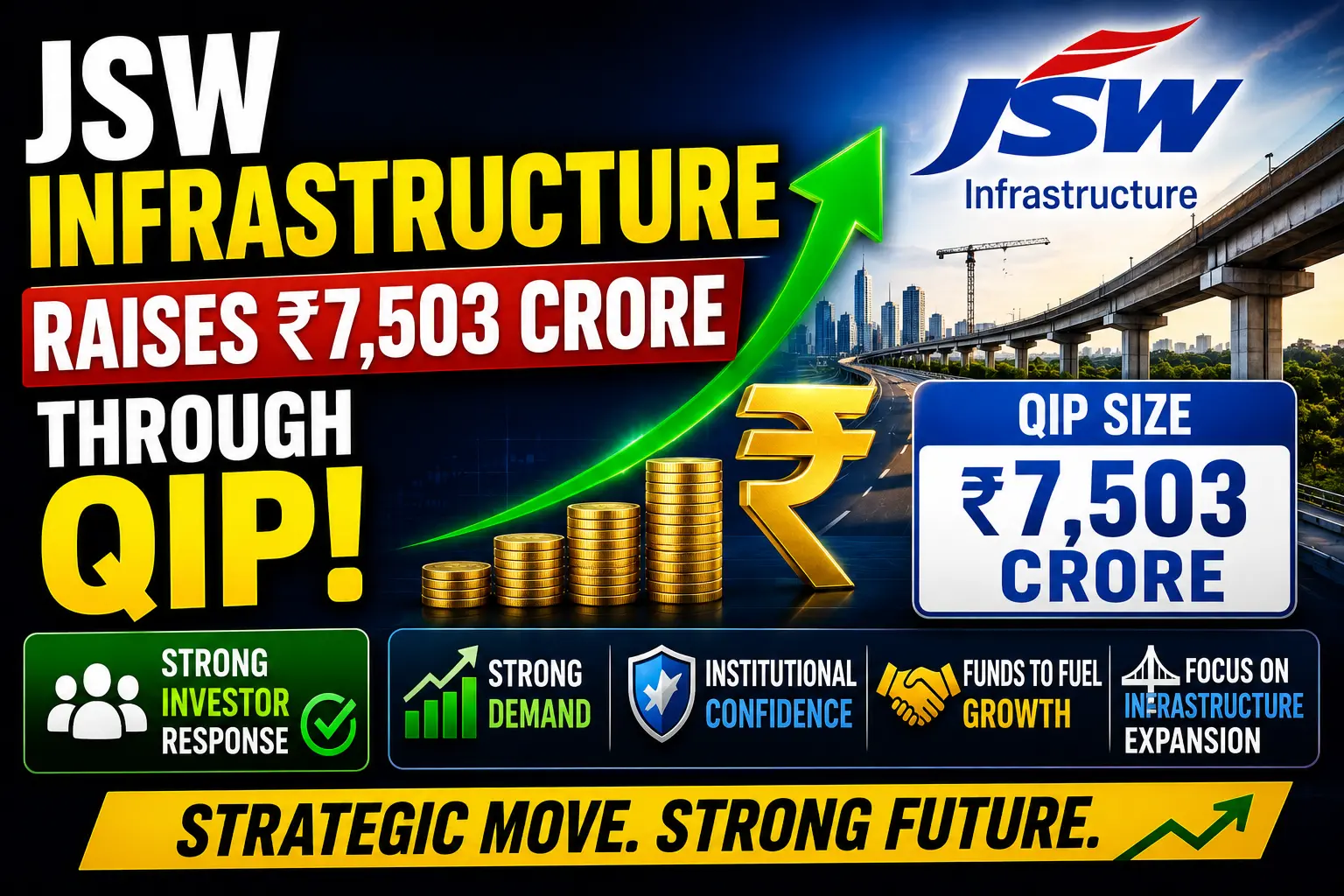
JSW Infrastructure has successfully closed its massive ₹7,503 crore Qualified Institutional Placement (QIP), marking one of the biggest fundraising deals in India’s infrastructure sector in 2026.
The company fixed the issue price at ₹285 per share, while the QIP reportedly received an overwhelming response from institutional investors and was subscribed nearly seven times.
The fresh funds will mainly be used for expansion projects, capital expenditure, and debt reduction plans.
JSW Infrastructure Successfully Completes ₹7,503 Crore QIP
JSW Infrastructure announced that it has successfully completed its ₹7,503 crore QIP fundraising round. The company fixed the final issue price at ₹285 per share.
The fundraising saw strong participation from institutional investors, showing continued confidence in India’s infrastructure growth story despite recent market volatility.
Reports suggest the issue was oversubscribed nearly seven times, highlighting strong demand from large investors.
Why This QIP Is Important for JSW Infrastructure
The company plans to use the fresh capital for multiple strategic purposes.
Main use of funds
- Infrastructure expansion projects
- Capital expenditure requirements
- Port and logistics development
- Debt repayment and balance sheet improvement
Experts believe the fundraising will strengthen the company’s financial position and support long-term business growth.
Strong Investor Confidence Despite Market Volatility
The successful QIP comes at a time when markets have been facing uncertainty due to global geopolitical tensions and fluctuating crude oil prices.
Still, institutional investors showed strong confidence in JSW Infrastructure’s business model and future expansion plans.
The heavy subscription indicates that investors continue to prefer companies linked to India’s long-term infrastructure and logistics growth.
Why Infrastructure Stocks Are in Focus
Infrastructure companies have remained in focus because of rising government spending on:
- Ports
- Roads
- Logistics
- Industrial corridors
- Manufacturing expansion
India’s growing trade activity and increasing cargo demand are also creating long-term opportunities for port operators and logistics companies.
JSW Infrastructure is considered one of the important private port operators in the country, and investors are closely tracking its future expansion strategy.
Share Price Reaction
Despite the strong fundraising announcement, shares of JSW Infrastructure ended lower during the trading session.
The stock closed around 2% lower at nearly ₹330.50 per share.
Market analysts believe short-term profit booking and overall market volatility may have impacted the stock movement temporarily.
However, long-term investors are more focused on how effectively the company utilizes the newly raised funds.
What Is a QIP?
A Qualified Institutional Placement (QIP) is a method through which listed companies raise money from institutional investors like:
- Mutual funds
- Insurance companies
- Foreign institutional investors
- Banks
Companies usually use QIPs to raise funds quickly without going through lengthy regulatory procedures involved in public offerings.
Final Thoughts
JSW Infrastructure’s ₹7,503 crore QIP reflects strong institutional confidence in India’s infrastructure sector. The company’s focus on expansion, project development, and debt reduction could support long-term growth in the coming years.
While short-term stock movements may remain volatile, the successful fundraising gives the company stronger financial flexibility for future projects.
Investors will now closely watch execution, expansion progress, and future earnings growth.
Also Read : Rupee Gains Against Dollar but Global Risks Still Keep Investors on Edge
Disclaimer
This article is for informational purposes only and should not be considered investment advice. Investors should conduct their own research and consult financial professionals before making any investment decisions.